แสดงบทความที่มีป้ายกำกับ Writing แสดงบทความทั้งหมด

วันศุกร์ที่ 28 สิงหาคม พ.ศ. 2558

Story Acting

งานอีกชิ้นของเราคือการแสดงละครตอน
โดยเอาเนื้อเรื่องมาจาก Far from the Madding Crowd ซึ่งเป็นหนังสืออ่านนอกเวลาที่เราอ่านอยู่แล้ว

สำหรับคนที่อ่านเนื้อเรื่องแล้วยังไม่เข้าใจ มีตัวช่วยนะ
เนื่องจากเรื่องนี้มี version ที่เป็นภาพยนตร์ ให้เราเข้าไปดูได้ ที่นี่


Source: https://38.media.tumblr.com/8fbed0d91b287b0ab16eb23a6ad6b905/tumblr_no5hmeXEwJ1ute4r5o1_500.gif


ในหนังสืออ่านนอกเวลามีทั้งหมด 19 ตอน
แต่เราจะแบ่งกลุ่มออกเป็น 9 กลุ่ม ซึ่งจะมีสมาชิกในกลุ่ม กลุ่มละ 15-16 คนเท่านั้น


กลุ่มที่ได้หมายเลขที่ 1 แสดงเป็นลำดับที่ 1   แล้วก็เรียงกันไปจนถึงกลุ่มที่ได้หมายเลข 9

ลำดับที่ 1 แสดงเนื้อหาใน Chapter  1, 2,
ลำดับที่ 2 แสดงเนื้อหาใน Chapter  3, 4,
ลำดับที่ 3 แสดงเนื้อหาใน Chapter  5, 6
ลำดับที่ 4 แสดงเนื้อหาใน Chapter  7, 8
ลำดับที่ 5 แสดงเนื้อหาใน Chapter  9, 10
ลำดับที่ 6 แสดงเนื้อหาใน Chapter  11, 12
ลำดับที่ 7 แสดงเนื้อหาใน Chapter  13, 14
ลำดับที่ 8 แสดงเนื้อหาใน Chapter  15, 16
ลำดับที่ 9 แสดงเนื้อหาใน Chapter  17, 18, 19


แต่ละกลุ่มใช้เวลาในการแสดง 12-15 นาทีเท่านั้น

วันแสดงคือวันที่ 28 ตุลาคม 2558 เวลา 17.00 น ถึง 20.00 น.
สถานที่แสดงคือ ห้อง UD 266


เกณฑ์ในการให้คะแนน
ในวันนั้น จะมีกรรมการ 3 ท่านให้คะแนนแต่ละกลุ่ม

จากคะแนนเต็ม 5 คะแนน มีเกณฑ์ 5 เรื่อง
ให้เราเตรียมตัวโดยอ่านคำถามด้านล่างในแต่ละเรื่อง แต่ละเกณฑ์

1. Does the story capture attention of your audiences? (1 point)
2. Do you speak with audible volume and clear pronunciations? (1 point)
3. Do you use the language that makes the audience follow the story easily? (1 point)
4. Do you make facial gestures and/or body moves that help the audiences understand the story? (1 point)
5. Do the audiences like your story acting? (1 point)

วันอังคารที่ 25 สิงหาคม พ.ศ. 2558

Keeping a Diary

นักศึกษาเขียน Diaries
โดยให้เขียนเป็น Diary Entries หรือ Travel Diary ก็ได้


โดย
ชิ้นที่ 1 ส่งภายในวันที่ 10 กันยายน 2558
ชิ้นที่ 2 ส่งภายในวันที่ 29 ตุลาคม 2558

งานชิ้นที่ 1 ให้เขียน diary ที่มีความยาว 50-70 คำ
งานชิ้นที่ 2 ให้เขียน diary ที่มีความยาว 50-70 คำ เช่นกัน

ซึ่งนักศึกษาสามารถใช้ตัวช่วยดังต่อไปนี้

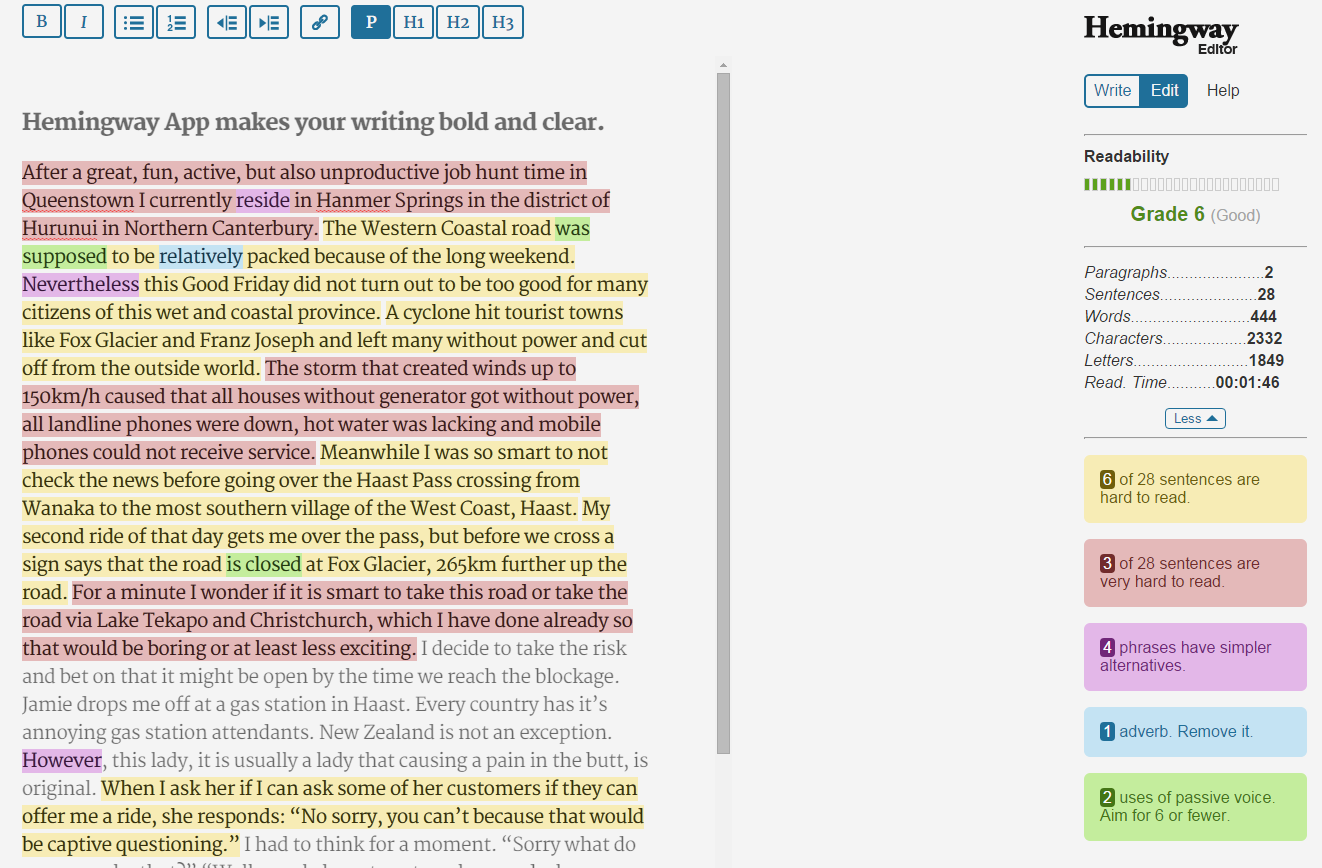
ตัวช่วยในการนับคำ และประเมินคุณภาพการเขียนของตนเองในเบื้องต้น
ให้นำข้อความใส่ลงไปใน Hemingway App

Heminigway App 

เมื่อเราใส่สิ่งที่เราเขียนลงไป ทางด้านขวาของหน้าเว็บจะปรากฏข้อมูลให้เรา เช่น
1. จำนวน paragraphs
2. จำนวน sentences
3. จำนวน words
4. จำนวน ตัวอักษรและเครื่องหมายวรรคตอน
5. จำนวน ตัวอักษร

นอกจากนี้ ด้านล่างจะมีสีต่าง ๆ บอก เช่น
สีเหลือง คือจำนวนประโยคที่เขียนแล้วอ่านยากมาก ๆ
สีแดง คือจำนวนประโยคที่เขียนแล้วอ่านยาก

แสดงว่าประโยคที่เราเขียนยังสามารถแก้ไขได้อีก


เราสามารถดูตัวอย่างการเขียน Diaries ได้จาก page ต่าง ๆ

ขอแนะนำตัวอย่างการเขียน Diary Entries จาก 2 แหล่งครับ


Photo Credit: http://www.telegraph.co.uk/sponsored/business/sme-home/11270618/record-keeping-business-travelling.html


1. Examples of Diary Entries (by WikiHow)


2. Examples of Travel Entries (by Travel Diaries)


เมื่อนักศึกษาเขียนงานเสร็จแล้วให้โพสต์ลงในกล่องข้อความ เฟสบุ๊คของครู
โดยเขียนชื่อ นามสกุล และรหัส ตามด้วยสิ่งที่เขียนเลยครับ เช่น


นางสาวนฤมิตร จริตมงคลวิเศษ 54125XXXX


I was very tired this morning...เขียนต่อจบได้ 50-70 คำ

เป็นอันเสร็จงานทั้ง 2 ชิ้นครับ

Remark: This page is a material to teach English to students with no commercial purposes.

วันอาทิตย์ที่ 31 สิงหาคม พ.ศ. 2557

Learning Macro Skills through Stories in English

This is my intention to put all the teaching materials related to stories for you guys who teach English as a second or foreign language.

A. Resources for Stories


1. Practice using "past tense" in stories


Jack and the Beanstalk

Stories by Level

The Simpsons


2. Why are there sentences in "present tense" form in narration?

Present Tense and Past Tense in Narration


B. Literature

Benefits of Using Short Stories in the EFL Context


วันจันทร์ที่ 10 ธันวาคม พ.ศ. 2555

The Lion and the Mouse


Assignment

Part 1 ใช้เวลา 40-45 นาที
ถ้าทำทันก็หาคำศัพท์ (Part 3) ด้วย
วันสอบจริง ไม่เขียนอะไรลงในข้อสอบ นะครับ

Part 2:   Write a paragraph of 7-10 sentences for each question.
Q1. What is the lesson you learn from this story?
[ What does this story teach you?    
What did you learn from this story? ]

Q2. What is your “Lion and Mouse” story?
[ When did something like this happen to you? What were you? Were you the lion or the mouse> Tell your story. ]

Part 3:   Vocabulary
Use online dictionaries to find the definitions and sample sentences of  3 words you don’t know from
the story "The Lion and the Mouse".

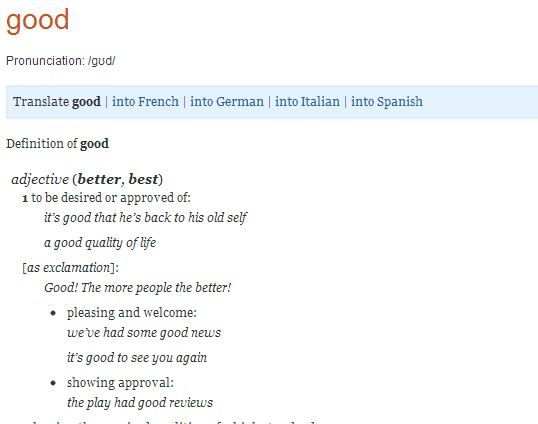
ให้เข้าไปที่ Oxford Online English Dictionary

ฝึกหาความหมายภาษาอังกฤษโดยให้ใช้คำว่า good
ให้ใส่คำว่า good ในช่องค้นหา

1.good  (adj)
Meaning: (คำจำกัดความ ภ. อังกฤษ)
ความหมาย ภ. ไทย:
ตัวอย่างประโยค:   (แต่งเอง)


วันศุกร์ที่ 21 กันยายน พ.ศ. 2555

วันจันทร์ที่ 10 กันยายน พ.ศ. 2555

MAIN IDEAS (TOPIC SENTENCES)


MAIN IDEAS (TOPIC SENTENCES)
          The main idea of a paragraph is presented as a "topic sentence". This is  the most important part of a paragraph that introduces the reader to the topic. Put a, b or c inthe blank given.

Exercise 1. Choose the best topic sentence for each group of supporting sentences. 

Example: ___________b_____________. I usually go skiing every weekend in the winter even though it is expensive. I love the feeling of flying down a mountain. The views are beautiful from the top of a mountain and along the trails. Even the danger of falling and getting hurt can’t keep me away from the slopes on a winter day.
a) Skiing is expensive.
b) Skiing is my favourite sport.
c) Skiing is dangerous.

1.) _______________________________________________. North Americans send cards for many occasions. They send cards to family and friends on birthdays and holidays. They also send thank-you cards, get well cards, graduation cards, and congratulation cards. It is very common to buy cards in stores and send them through the mail, but turning on the computer and sending cards over the Internet is also popular.
a) Sending cards is very popular in North America.
b) Birthday cards are the most popular kind of card.
c) It is important to send thank-you cards.

2.) _____________________________________________ . I enjoy summer sports like water skiing and baseball. The weather is usually sunny and hot, so I can go to the beach almost every day. Gardening is my hobby and I spend many summer days working in my garden. Unfortunately, the days pass too quickly in summer.
a) I like to garden in summer.
b) Summer is my favourite season.
c) Summer is to short.

3.) ________________________________________ . First of all, we need money to repair old roads and build new roads. We also need more to pay teachers’ salaries and to pay for services such as trash collection. Finally, more tax money is needed to give financial help to the poor citizens of the city. It is clear that the city will have serious problems if taxes are not raised soon.
a) We should raise city taxes.
b) City taxes are too high.
c) City taxes pay for new roads.

4.) _________________________________________ . For example, a person can have breakfast in New York, board an airplane, and have dinner in Paris. A businesswoman in London can instantly place an order with a factory in Hong Kong by sending a fax. Furthermore, a schoolboy in Tokyo can turn on a TV and watch a baseball game being played in Los Angeles.
a) Airplanes have changed our lives.
b) Advances in technology have made the world seem smaller.
c) The fax machine was an important invention.

5.) ___________________________________________ . One thing you must consider is the quality of the university’s educational program. You also need to think about the school’s size and location. Finally, you must be sure to consider the university’s tuition to make sure you can afford to go to school there. 
a) It is expensive to attend a university in the United States.
b) There are several factors to consider when you choose a university to attend.
c) You should consider getting a good education.


Exercise 2: Write a topic sentence for each paragraph. Make sure your topic sentence expresses the main idea of the paragraph.

Example: Miami is the perfect place to take a vacation. It is always sunny and warm. The beaches are gorgeous, with soft white sand and beautiful water. There are many fine restaurants in the Miami area, and most of the hotels offer terrific entertainment nightly. It’s no wonder that Miami is my first choice for a vacation destination.
1.) ______________________________________________ . He has collected stamps and coins ever since he was a child. He is very proud of his valuable collections. Paul also enjoys painting and drawing. Recently he has become interested in gardening. Out of all his hobbies, Paul’s favorite one is reading. He usually reads at least one book every week. Paul keeps busy with all of his hobbies.

2.) _____________________________________________ . I can’t wait to come home from school and eat the delicious meals she has prepared. She is famous for her desserts like peach pie and chocolate soufflé. She is always experimenting with new recipes and trying different ingredients. No one in the world can cook the way my mother does.

3.) ______________________________________________ . It never starts in cold weather. The horn and the left turn signal don’t work properly. Worst of all, the radio only gets one station and the CD player is completely broken. I wish I could get a new car.

4.) ______________________________________________ . First and most importantly, the work is very interesting. I learn new things every day and I get to travel a lot. In addition, my boss is very nice. She is always willing to help me when I have a problem. I have also made many new friends at my job. Last, but not least, the salary is fantastic.

5.) ______________________________________________ . To start things off, my plane was six hours late. When I finally got to my hotel, I was very disappointed. It was small and dirty. On the third day, my wallet was stolen, and I lost all my credit cards. It rained very day except one, and on that day I got a terrible sunburn. All in all, it wasn’t a vacation to remember.


Source: Blanchard, K. in Root, C. 2003. Ready to Write. NY: Pearson Education - Longman.

วันพฤหัสบดีที่ 23 สิงหาคม พ.ศ. 2555

Writing Activity-Money isn't Everything


Do you agree or disagree with the following statement? 

"Money is not everything in a person's life." 

Write an essay which consists of  250-300 words. 
Make your answer clear and interesting. Support your idea with argument and good examples.


Essay Writing-Write your Life Story


Do you see the picture below? How would you agree and disagree with the sentence which says that "when writing the story of your life, don't let anyone hold the pen..." Write a 350-word essay to support your idea? Click on the picture if you do not see it clearly.


Writing Activity-Fantasizing A New Story


According to your fantasy and the picture sequence, how can a story be created differently? Use your fantasy to make a brand-new story. Then write the story in the comment box. This is very fun, I think.


This activity is good for beginning and lower-intermediate levels.

วันอาทิตย์ที่ 19 สิงหาคม พ.ศ. 2555

Short Romance-The Lost Wallet


The Lost Wallet"

As I walked home one freezing day, I stumbled on a wallet someone had lost in the street. I picked it up and looked inside to find some identification so I could call the owner. But the wallet contained only three dollars and a crumpled letter that looked as if it had been in there for years.

The envelope was worn and the only thing that was legible on it was the return address.

I started to open the letter, hoping to find some clue. Then I saw the dateline–1924. The letter had been written almost sixty years ago. It was written in a beautiful feminine handwriting on powder blue stationery with a little flower in the left-hand corner. It was a “Dear John” letter that told the recipient, whose name appeared to be Michael, that the writer could not see him any more because her mother forbade it. Even so, she wrote that she would always love him.

It was signed, Hannah.

It was a beautiful letter, but there was no way except for the name Michael, that the owner could be identified. Maybe if I called information, the operator could find a phone listing for the address on the envelope.

Operator,” I began, “this is an unusual request. I’m trying to find the owner of a wallet that I found. Is there anyway you can tell me if there is a phone number for an address that was on an envelope in the wallet?” She suggested I speak with her supervisor, who hesitated for a moment then said, “Well, there is a phone listing at that address, but I can’t give you the number.” She said, as a courtesy, she would call that number, explain my story and would ask them if they wanted her to connect me. I waited a few minutes and then she was back on the line. “I have a party who will speak with you.”

I asked the woman on the other end of the line if she knew anyone by the name of Hannah. She gasped, “Oh! We bought this house from a family who had a daughter named Hannah. But that was 30 years ago!”

“Would you know where that family could be located now?” I asked.

“I remember that Hannah had to place her mother in a nursing home some years ago,” the woman said. “Maybe if you got in touch with them they might be able to track down the daughter.”

She gave me the name of the nursing home and I called the number. They told me the old lady had passed away some years ago but they did have a phone number for where they thought the daughter might be living.

I thanked them and phoned. The woman who answered explained that Hannah herself was now living in a nursing home.

This whole thing was stupid, I thought to myself. Why was I making such a big deal over finding the owner of a wallet that had only three dollars and a letter that was almost 60 years old?

Nevertheless, I called the nursing home in which Hannah was supposed to be living and the man who answered the phone told me, “Yes, Hannah is staying with us. ”

Even though it was already 10 p.m., I asked if I could come by to see her. “Well,” he said hesitatingly, “if you want to take a chance, she might be in the day room watching television.”

I thanked him and drove over to the nursing home. The night nurse and a guard greeted me at the door. We went up to the third floor of the large building. In the day room, the nurse introduced me to Hannah.

She was a sweet, silver-haired old timer with a warm smile and a twinkle in her eye.

I told her about finding the wallet and showed her the letter. The second she saw the powder blue envelope with that little flower on the left, she took a deep breath and said, “Young man, this letter was the last contact I ever had with Michael.”

She looked away for a moment deep in thought and then said Softly, “I loved him very much. But I was only 16 at the time and my mother felt I was too young. Oh, he was so handsome. He looked like Sean Connery, the actor.”

“Yes,” she continued. “Michael Goldstein was a wonderful person. If you should find him, tell him I think of him often. And,” she hesitated for a moment, almost biting her lip, “tell him I still love him. You know,” she said smiling as tears began to well up in her eyes, “I never did marry. I guess no one ever matched up to Michael…”

I thanked Hannah and said goodbye. I took the elevator to the first floor and as I stood by the door, the guard there asked, “Was the old lady able to help you?”

I told him she had given me a lead. “At least I have a last name. But I think I’ll let it go for a while. I spent almost the whole day trying to find the owner of this wallet.”

I had taken out the wallet, which was a simple brown leather case with red lacing on the side. When the guard saw it, he said, “Hey, wait a minute! That’s Mr. Goldstein’s wallet. I’d know it anywhere with that bright red lacing. He’s always losing that wallet. I must have found it in the halls at least three times.”

“Who’s Mr. Goldstein?” I asked as my hand began to shake.

“He’s one of the old timers on the 8th floor. That’s Mike Goldstein’s wallet for sure. He must have lost it on one of his walks.”

I thanked the guard and quickly ran back to the nurse’s office. I told her what the guard had said. We went back to the elevator and got on. I prayed that Mr. Goldstein would be up.

On the eighth floor, the floor nurse said, “I think he’s still in the day room. He likes to read at night. He’s a darling old man.”

We went to the only room that had any lights on and there was a man reading a book. The nurse went over to him and asked if he had lost his wallet. Mr. Goldstein looked up with surprise, put his hand in his back pocket and said, “Oh, it is missing!”

“This kind gentleman found a wallet and we wondered if it could be yours?”

I handed Mr. Goldstein the wallet and the second he saw it, he smiled with relief and said, “Yes, that’s it! It must have dropped out of my pocket this afternoon. I want to give you a reward.”

“No, thank you,” I said. “But I have to tell you something. I read the letter in the hope of finding out who owned the wallet.”

The smile on his face suddenly disappeared. “You read that letter?”

“Not only did I read it, I think I know where Hannah is.”

He suddenly grew pale. “Hannah? You know where she is? How is she? Is she still as pretty as she was? Please, please tell me,” he begged.

“She’s fine…just as pretty as when you knew her.” I said softly.

The old man smiled with anticipation and asked, “Could you tell me where she is? I want to call her tomorrow.” He grabbed my hand and said, “You know something, mister, I was so in love with that girl that when that letter came, my life literally ended. I never married. I guess I’ve always loved her. ”

“Mr. Goldstein,” I said, “Come with me.”

We took the elevator down to the third floor. The hallways were darkened and only one or two little night-lights lit our way to the day room where Hannah was sitting alone watching the television. The nurse walked over to her.

“Hannah,” she said softly, pointing to Michael, who was waiting with me in
the doorway. “Do you know this man?”

She adjusted her glasses, looked for a moment, but didn’t say a word. Michael said softly, almost in a whisper, “Hannah, it’s Michael. Do you remember me?”

She gasped, “Michael! I don’t believe it! Michael! It’s you! My Michael!” He walked slowly towards her and they embraced. The nurse and I left with tears streaming down our faces.

“See,” I said. “See how the Good Lord works! If it’s meant to be, it will be.”

About three weeks later I got a call at my office from the nursing home. “Can you break away on Sunday to attend a wedding? Michael and Hannah are going to tie the knot!”

It was a beautiful wedding with all the people at the nursing home dressed up to join in the celebration. Hannah wore a light beige dress and looked beautiful. Michael wore a dark blue suit and stood tall. They made me their best man.

The hospital gave them their own room and if you ever wanted to see a 76-year-old bride and a 79-year-old groom acting like two teenagers, you had to see this couple.

A perfect ending for a love affair that had lasted nearly 60 years.


วันจันทร์ที่ 13 สิงหาคม พ.ศ. 2555

Paragraph writing: Fruits for health


Writing a 100-word paragraph to support the argument which  says that "Fruits are good for health". You can apply some information given in the picture below.


วันจันทร์ที่ 6 สิงหาคม พ.ศ. 2555

Idioms in Academic papers


1. cast doubt on something
to cause uncertainty about something

100 Most Common Idioms


100 Most Common Idioms (alphabetical)

about to (do something)
Meaning: to be on the point of doing something
Ex:     I was about to leave when the phone rang.


according to (someone or something)
Meaning: as said or told by someone, in agreement with something, in the order of something, in proportion to something
Ex:   According to our teacher, there will be no class next week.
        We did everything according to the terms of our agreement.

account for (something)
Meaning: to provide an explanation or answer for something
Ex:  The bad weather accounts for the fact that few people came to the meeting.

after all
Meaning: considering the fact that something happened, something that is usually assumed
Ex:      "You don't need to phone him. After all, he never phones you."

all of a sudden
Meaning:   suddenly, without advance warning
Ex:   All of a sudden it became cloudy and began to rain.

as a matter of fact
Meaning:   actually
Ex:  As a matter of fact, we have been to the history museum many times."

as far as
- to the extent or degree of something
As far as I know the movie will start in a few minutes.

as for
- with regard to, concerning
"As for me, I think that I will return home now."

as if
- in the same way that something would be, that
The drink tastes as if it were made with orange juice.
It seemed as if the whole town came to the concert.

as long as
- provided that, on condition that
"As long as you promise to be careful you can borrow my car."

as soon as
- just after something, when
I phoned my friend as soon as I finished dinner.

as to
- with regard to, according to
"As to your question, I will answer it tomorrow."
The players were put into groups as to their ability.

as well
- in addition, also, too
I plan to take a computer course this summer as well.

as well as (someone or something)
- in addition to someone or something
"Please bring your swimming suit as well as your towel."

back and forth
- backwards and forwards, first one way and then the other way
The argument went back and forth before the judge made a decision.

better off
- to be in a better situation than before
My friend would be better off if he sold his old car and bought a new one.

break down (something)
- to divide something into parts, to separate something into simpler substances
We tried to break down the problem for further study.
The sugar began to break down soon after it was swallowed.

break up
- to separate, to divide into groups or pieces, to put an end to something
Nobody wanted to break up their groups.
We usually break up into small groups during our class.

by the way
- incidentally
"By the way, could you please bring your laptop computer tomorrow."

carry out (something)
- to put something into action, to accomplish something, to do something
The scientist wanted to carry out several experiments before discussing the new medicine.

come on!
- please, hurry, go faster
"Come on, I only have a few minutes before I must go."
"Come on, stop doing that."

come up
- to happen unexpectedly
I will not be able to go to the party if something else comes up.

come up with (something)
- to produce or find a thought/idea/answer
I tried to come up with a name for the new magazine.

deal with (something)
- to be concerned with something, to take action about something
We will deal with the boxes tomorrow.

end up (doing something or going somewhere)
- to do something that one had not planned to do, to go somewhere one had not planned to go
We ended up going to a restaurant after the movie last night.

figure out (someone or something)
- to try to understand someone or something, to solve something
I finally figured out how to use the new DVD player.

fill in (something)
- to write words in blank spaces
"Please fill in this form and give it to the receptionist."

find out (something)
- to learn or discover something
My mother is angry at me because she found out that I had quit my French class.

first of all
- the very first thing
First of all we prepared the garden and then we planted the seeds.

for good
- permanently
The city will close the public swimming pool for good next week.

for sure
- without doubt, certainly, surely
"I will go to the movie with you for sure next week."

get back to (something)
- to return to something
I was happy to get back to my work after my holiday.

get into (something)
- to become interested or involved in something
I do not want to get into an argument with my friend.
We will get into the details of the plan tomorrow.

get into (somewhere)
- to enter somewhere
My friend wants to get into a good university.
I bumped my head as I was getting into the car.

get out of (somewhere)
- to leave somewhere, to escape from somewhere
I want to hurry and get out of my house.

get rid of (something)
- to give or throw something away, to sell or destroy something, to make a cold or fever disappear
I bought a new television set so I want to get rid of the old one.

get through (something)
- to complete something, to finish something
My friend is having trouble getting through her final exams.
I have much reading that I must get through before tomorrow.

go ahead
- to begin to do something
"Let`s go ahead and start now. We can`t wait any longer."

go on
- to continue
The game will probably go on for an hour after we leave.

go over (something)
- to examine or review something
The accountant will go over the books tomorrow.
We plan to go over that question tomorrow.

go through (something)
- to discuss something, to look at something, to do something
The teacher decided to go through the exercise before the test.

go with (something)
- to choose one thing rather than another
We decided to go with the small rental car rather than the large one.

hang out (somewhere/with someone)
- to spend one`s time with no great purpose, to spend leisure time with friends
Recently my friend has been hanging out with a group of people who are not a good influence on him.

have (something) to do with (something)
- to be about something, to be on the subject of something, to be related to something
"The book has something to do with cooking but I am not sure if you will like it."
That problem has nothing to do with me.

hold on
- to wait a minute, to stop, to wait and not hang up the phone
"Please hold on for a minute while I lock the window."

in a way
- to a certain extent, a little, somewhat
In a way I want to go to the new restaurant but in a way I don`t really care.

in case
- if, if something should happen
I will take my umbrella in case it rains.

in common
- shared together or equally, in use or ownership by all
I had nothing in common with the other members of the class.

in detail
- giving all the details, item by item
The saleswoman explained about the new product in detail.

in effect
- for practical purposes, basically
The man's silence was in effect a way of disagreeing with the other people in the meeting.

in fact
- actually, the truth is
The man has been to China before. In fact he has been there three times.

in favor of (someone or something)
- to approve or support someone or something
Everybody is in favor of the new police chief.
My company is not in favor of changing our holiday schedule.

in general
- in most situations or circumstances
In general, most of the people in our apartment are happy with the new manager.

in order to
- for the purpose of
They have decided to close down the school for the summer in order to do some major repairs.

in other words
- in a different (usually more direct) way
"In other words, if you do not finish the assignment by Wednesday you will not pass the course."

in place
- in the proper place or location
Everything in the room was in place when we arrived for the meeting.

in some ways
- in some unspecified way or manner, by some unspecified means
In some ways I know what my friend means but in some ways I do not.

in terms of (something)
- with regard to something
In terms of our agreement with the other company we were not allowed to sell the products online.

in time
- early enough
I did not come home in time to meet my cousin.

keep (someone or something) in mind
- to remember and think about someone or something
I told my co-workers to keep the new starting time for work in mind.

kind of
- somewhat, more or less, moderately
I was kind of tired when I arrived home last night.

look for (something)
- to try to find something, to hunt/search for something
My friend has been looking for her credit card all morning but she can`t find it.

look up (something)
- to search for something in a dictionary or other book
I will look up my friend's name in the telephone book.
I looked up the word in the dictionary.

make a difference
- to cause a change in a situation
It does not make a difference whether our boss comes to the meeting or not.

make sense
- to seem reasonable
His new proposal really does make sense.

make sure
- to make certain, to establish something without a doubt
I want to make sure that my friend is going to meet me tomorrow.

more or less
- somewhat, to some extent
I more or less have decided to study business next year.

no matter
- regardless
No matter how hard that I try, my piano teacher is never satisfied.

not at all
- certainly not
I am not at all happy with my new computer.

of course
- certainly, definitely, naturally
"Of course you can use my car if you want to."

on the other hand
- however, in contrast, looking at the opposite side of a matter
He is very intelligent but on the other hand he is very lazy and always gets low marks at school.

on time
- at the scheduled time, exactly at the correct time, punctually
Our train arrived exactly on time.

once again
- again, one more time, once more
I tried once again to phone my boss at his home .

open to (something)
- to be agreeable to learn or hear about new ideas or suggestions
Most members of the class were open to the teacher's ideas.

pick up (something)
- to get or receive something
I will pick up my dry cleaning tomorrow.
I picked up a copy of the newspaper at the station.

point out (someone or something)
- to explain or call attention to someone or something
My teacher was very kind when she pointed out the mistakes that I had made.

put out (something)
- to produce or make something (a product/brochure/report/CD/movie/paper)
The company puts out a newsletter every month for the employees.

regardless of (something)
- without considering or thinking about something, without regard to something
Regardless of the weather we are going to go fishing tomorrow morning.

right away
- immediately
"I forgot to bring my book but I will go home and get it right away."

rule out (someone or something)
- to decide against or eliminate someone or something
The police ruled out the man as a possible bank robber.
We decided to rule out Monday as the day to have our meeting.

run into (something - a fact/trouble/problems/difficulty)
- to experience something, to encounter something
The mechanic ran into trouble when he was fixing my car.
I ran into some interesting facts when I was researching my essay.

set up (something)
- to establish something, to provide the money for something
The newspaper company provided the money to set up the new travel magazine.
The company set up a unique situation to test the new product.

show up
- to appear, to arrive, to be present
"What time did your friend show up for the party?"

so far
- until now
So far no one has entered the speech contest at the television station.

so to speak
- as one might or could say, this is one way to say something
We had a good time at the restaurant, so to speak, although the service was not very good.

sort of (something)
- to be almost something, to be similar to something, to be not quite something
"Did you finish cleaning the kitchen?"
"Sort of, but not really."

stick with (something)
- to continue doing something, to not quit something
My brother has been able to stick with his trumpet lessons since he was a child.

take advantage of (someone or something)
- to use someone or something for one's own benefit
We took advantage of the beautiful weather and went to the beach.

take care of (someone or something)
- to look after or give attention to someone or something
You should take care of your health or you will become sick.

take out (something)
- to remove something from somewhere, to extract something
The teacher told us to take out our books.
I took out some onions from the refridgerator.

take over (something)
- to take control of something, to take command of something
The large company wants to take over some of the small companies in our area.

take place
- to happen, to occur
The soccer game took place on the coldest day of the year.

to the extent that
- to the degree that, in so far as
I plan to provide information about the new company policy to the extent that I am familiar with it.

turn in (something)
- to give something to someone, to hand something to someone
I arrived at school early so that I could turn in my essay.

turn out
- to be found or known, to prove to be true
It turned out that more people came to the party than we expected.

up to
- until, as far as a certain point, approaching a certain point
Up to last week I had never been inside a bowling alley.
There were probably up to thirty people at the meeting.

up to (someone) to decide/do (something)
- to be responsible to choose or decide something
It is up to the company president to decide when the meeting will start.

used to
- accustomed to
My friend is not used to living in such a big city.

with respect to (something)
- referring to something, concerning something
I do not know what the company will do with respect to the old computer system.

work out (for the best)
- to end successfully
I hope that everything will work out for my friend when she moves to London next week.


Source of information: The Idiom Connection

Essay Writing in Brief

                ขอแนะนำให้รู้จัก essay แบบง่าย ๆ ก่ิอน นั่นคือ 1-page essay ครับ

           ทำไมต้อง เป็น 1-page essay เนื่องจากเวลาที่เราจะไปสอบ TOEFL หรือ IELTS เราต้องเขียน essay ประมาณ 250 ถึง 275 คำ จึงอยากจะให้รู้จัก essay แบบนี้น่าจะดีที่สุดครับ


ใน essay ทั่วไปจะประกอบด้วย
1. Introduction ซึ่งจะมี thesis statement หรือ main idea ของภาพรวมตามข้อคำถามที่เราได้รับในข้อสอบ ข้อสอบส่วนใหญ่จะให้เขียน argumentative essay ครับ
2. Body จะมี arguments เพื่อนใช้สนับสนุนความคิดหลักในแต่ละย่อหน้าซึ่งจะสอดรับ ไปด้วยกันกับย่อหน้าืที่เป็น introduction และย่อหน้าที่เป็น conclusion ครับ

การที่จะเขียน 1-page essay หรือ essay อื่น ๆ ให้ได้ดีนั้น อย่าเอาข้อมูลมาจุก มายัดให้เต็ม ๆ แล้วส่งนะครับ เพราัะนั่นไม่ใช้ essay แต่เป็นแค่ writing เท่านั้น ให้เราอ่าน อ่าน แล้วก็อ่าน topic หรือ questions จนเข้าใจ พอเข้าใจแล้ว ก็ให้จรดปากกาหรือดินสอ list สิ่งที่เราจะพูดถึงสัก 5-6 ประเด็นที่สอดคล้องจริง ๆ กับหัวเรื่อง กับบทนำ(intro) และบทสรุป (conclusion)

อย่าคิดเยอะ เลือกความคิดที่เราเขียนได้จริง
อะไรที่ดูดี ดูเว่อร์ก็อาจจะเป็นสิ่งที่เขียนจริงแล้วอาจจะเขียนไม่ได้
อาจเป็นเพราะมันซับซ้อนหรือประสบการณ์ในการเขียนของเราอาจจะน้อยเกินไป

พอได้ประเด็นที่จะตอบคำถามหรือเป็นหัวข้อแล้ว ก็ให้นึกถึง arguments หรือ supports ที่เราอธิบายได้ เราชี้แจง หรือเรายกตัวอย่างได้อย่างชัดเจน

ให้เราคิดไว้สัก 5 แล้วเลือกมา 3 ประเด็นที่จะสอดรับและทำให้เข้าใจบทนำและบทสรุปได้
เขียนมันลงไปเป็นคำ ๆ เป็นวลีก่อน แล้วค่อย ๆ คิด ค่อย ๆ ขยายเป็นประโยค เพื่อเป็นตัวแทนของประเด็นที่เราจะพูดถึงในแต่ละย่อหน้า
เมื่อคิดได้แล้วก็เลือกมา 3 ประเด็น

ย่อหน้าบทนำต้องสั้น ประโยค thesis statement ต้องกระชับ
ทีนี้ก็มาเขียนย่อหน้า arguments ทั้ง 3 ย่อหน้า ใส่ประเด็นเดียวเท่านั้นในแต่ละย่อหน้า อย่าย่อย อย่าเยอะ อย่าอธิบายวกไปวนมา อย่าอธิบายห้วนจนเกินไป เห็นมั้ยว่าย่อหน้า Body ทั้ง 3 ย่อหน้าเป็นงานที่ยากที่สุด

แล้วสุดท้าย 

3. บทสรุป (conclusion) ก็ต้องกระชับ ต้องไปในแนวทางเดียวกับบทนำ (introduction)


เข้าไปอ่านเพิ่มเติมในกระทู้นี้นะ จะได้อะไรดี ๆ อีกเยอะ


คลิกไอค่อนด้่้่านล่างเพื่อทบทวน/เรียนรู้เรื่องอื่น ๆ ต่อไป เริ่มจากหน้าหลักของ Intro to Writing 

Click to go to the main page of "Intro to Writing"

วันพฤหัสบดีที่ 19 เมษายน พ.ศ. 2555

Reported Speech

ใช้ ask, tell และ say ดังนี้


1. ใช้ ask ซึ่งแปลว่า ถามว่า .....หรือไม่
ประธาน + ask + กรรม (คน) + if + ประโยคบอกเล่า/ปฎิเสธ
He asked his father if he could rest for a while.
เขาถามพ่อของเขาว่าเขาพักสับประเดี๋ยวได้ไหม
(เห็นมั้ยว่าหลัง if ตามด้วยประโยค นะ)


2. ใช้ ask ซึ่งแปลว่า ถามว่า .....ใคร อะไร ที่ไหน เมื่อไหร่ อย่างไร ทำไม
ประธาน + ask + กรรม (คน) + who/what/where/when/how/why + ประโยคบอกเล่า/ปฎิเสธ
He asked Joe where  I stayed last Friday.
ฉันถามโจว่าเมื่อวันศุกร์ที่ผ่านมาฉันพักที่ไหน
(หลัง WH-words ตามด้วยประโยคเช่นเดียวกับ if )


3. ใช้ ask หรือ tell ซึ่งแปลว่า ขอ(ร้อง) หรือบอก ให้ทำ (อะไร)
ประธาน +  ask/ tell + กรรม (คน) +  to + verb
He asked us to stay at his house today.
เขาขอให้พวกเราค้างที่บ้านเขาวันนี้


4. ใช้ ask หรือ tell ซึ่งแปลว่า ขอร้องหรือบอก ไม่ให้ทำ (อะไร)
ประธาน +  ask/ tell + กรรม (คน) +  not to + verb
He asked me not to go to Trang today.
เขาขอให้ฉันไม่ไปตรังวันนี้


5. ใช้ say ซึ่งแปลว่า พูดว่า .....
ประธาน + say that+ ประโยคบอกเล่า/ปฎิเสธ
He said that his son likes salad.
เขาบอกว่าลลูกชายเขสชอบสลัด


แบบฝึกหัด ลองทำดู 
แต่งประโยคต่อไปนี้เป็นภาษาอังกฤษ โดยใช้ ask, tell และ say
1. พ่อฉันบอกน้องสาวฉันไม่ให้เล่นเกมส์คอมพิวเตอร์


2. แม่ถามฉันว่าพรุ่งนี้ฉันจะออกจากบ้านกี่โมง


3. โจโจ้บอกให้คริสใช้บันได


4. โจโจ้พูดว่าคริสเดินขึ้นบันไดไป


เฉลย (ลากคลุม เดี๋ยวจะเห็นเอง)
1. My father told my sister not to play computer games.
2. Mother asked me what time I will leave home tomorrow.
3. Jojo told Chris to use the stairs.
4. Jojo said that Chris walked up the stairs.


กลับไปยังหน้าหลักของ วิชา 890102 Fundamental Reading and Writing หรืิอคลิกไอค่อนรูปวิชาืทางซ้ายมือ เพื่อทบทวนเรื่องอื่น ๆ

วันศุกร์ที่ 24 กุมภาพันธ์ พ.ศ. 2555

My English writing's story

เวลาที่เรียนการเขียนภาษาอังกฤษ โดยเฉพาะต้องเขียนเรียงความภาษาอังกฤษ รู้สึกเหมือนจะเป็นไข้กันบ้างไหม เชื่อไหมว่า...ขนาดเจ้าของภาษาหลายคนก็ไม่สามารถเขียนเรียงความได้้ี้ดี

นึกถึงตอนเราเขียนเรียงความภาษาไทยสิครับ จำได้ไหมว่าตั้งแต่เรียนมาจนโตจนาดนี้ เขียนเรียงความเรื่องไรไปบ้าง 

ผมขอเล่าของผมนะครับ ตอนนั้น ม. 1 ครับ
ผมเคยเขียนเรียงความเรื่อง "พลเมืองที่ดีของชาติ" โห ... ผมเขียนไม่ได้จริง ๆ ครับ 

ณ ตอนนั้น... ผมอยากจะส่งกระดาษเปล่าด้วยซ้ำ 

ผมจำได้ว่าภาษาไทยของผมก็อยู่ในระดับทีดีครับ แต่ให้เขียนเรื่อง พลเมือง ผมก็นอนหลับคากระดาษคำตอบไป 15 นาที และก็โดนอาจารย์เรียกให้ตื่น นอกจากวิชาคณิตศาสตร์ ก็ยังมีการเขียนที่ผมกลัวมากในเวลานั้น

ต่อมาผมมีโอกาสได้ฝึกการเขียนภาษาอังกฤษมากขึ้น ผมมีเพื่อนที่เป็นคนอิตาลี แอนเดรียมาเป็นนักเรียนแลกเปลี่ยนในห้องตอนผมอยู่ ม. 5 เลยทำให้ผมเห็นโลกของการเรียนภาษาอังกฤษชัดเจนขึ้น ที่บอกว่าชัดเจนขึ้น เพราะผมมีแรงจูงใจครับ เวลาที่แอนเดรียต้องการความช่วยเหลือ ก็จะมีผมกับเพื่อน ๆ ช่วย 
ผมเริ่มถือหนังสือภาษาอังกฤษ(ยืมจากห้องสมุด) กลับบ้านบ่อยขึ้น ผมกลายเป็น dictionary เคลื่อนที่ให้เพื่อน ๆ (ตอนนั้นผมเรียนห้องคิงสายวิทย์-คณิต ครับ) เมื่อมีแรงจูงใจ ผมก็มีความสุขกับการได้ตอบคำถามในห้อง (ซึ่งถ้าเป็น ฟิสิกส์ เคมี และคณิต ผมจะเงียบตลอด)


คลิกไอค่อนด้่้่านล่างเพื่อทบทวน/เรียนรู้เรื่องอื่น ๆ ต่อไป เริ่มจากหน้าหลักของ Intro to Writing 

Click to go to the main page of "Intro to Writing"

Punctuation

กำลังพัฒนาหน้านี้อยู่ครับ

คลิกไอค่อนด้่้่านล่างเพื่อทบทวน/เรียนรู้เรื่องอื่น ๆ ต่อไป เริ่มจากหน้าหลักของ Intro to Writing 

Click to go to the main page of "Intro to Writing"

Introduction to English Writing

เนื้อหาในรายวิชา